Electricity meters are essential devices that measure the amount of electricity consumed in our homes, offices, shops, and businesses. Today, traditional electricity meters and smart meters are both used, but they differ in technology, reading methods, monitoring features, and convenience. 🏠🔌
🔴 Normal Electricity Meter:
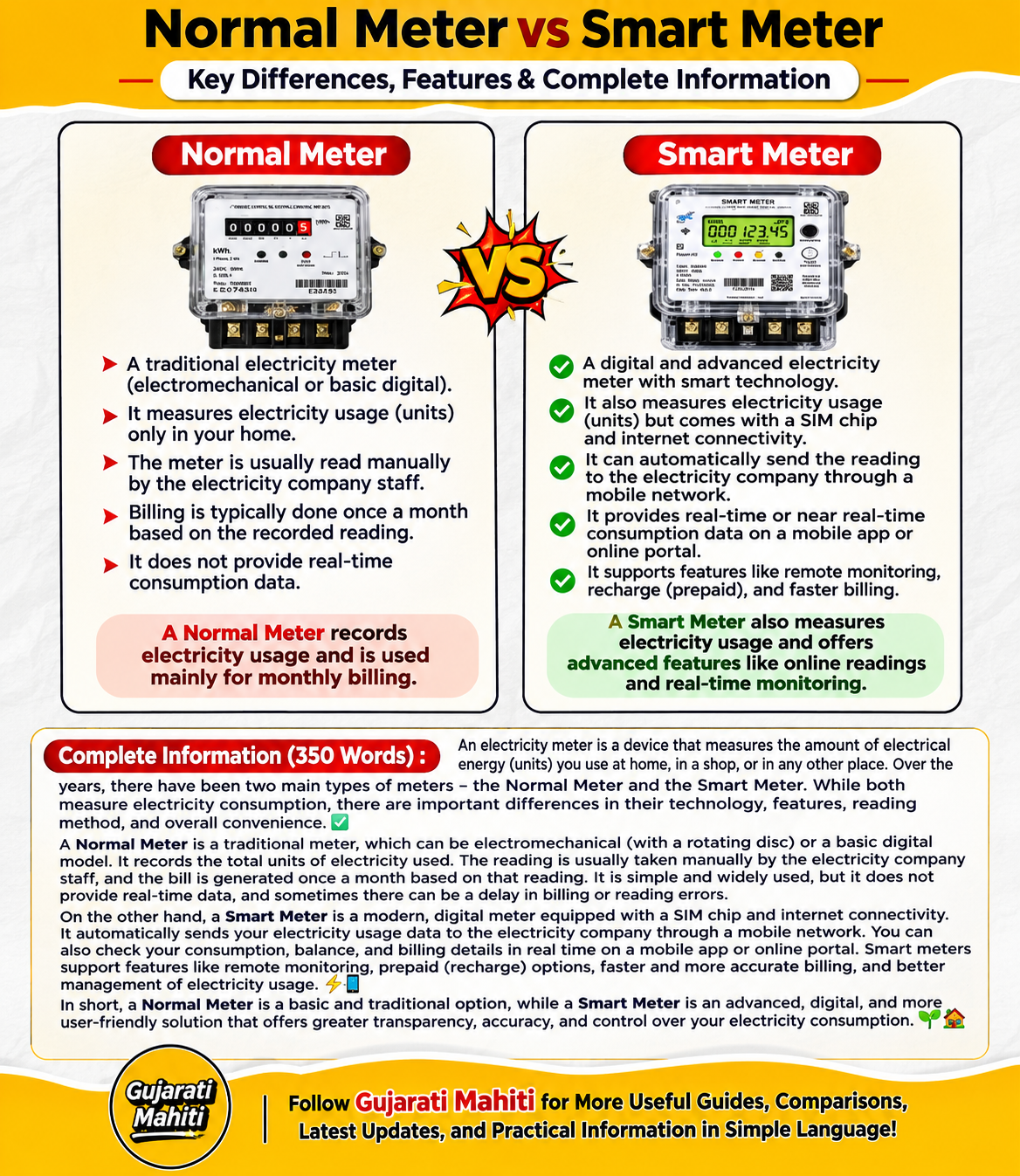
A normal meter is a traditional electricity meter that records the total electricity consumption of a household or business. It may use mechanical components or a basic digital display to measure electricity usage.
📊 The electricity reading is generally collected manually by electricity company staff. Based on the recorded units, the electricity bill is usually generated monthly.
🏠 These meters are commonly used in many places and provide basic electricity consumption information. However, they generally do not offer real-time usage monitoring through a mobile application.
🟢 Smart Electricity Meter:
A smart meter is a modern digital electricity meter equipped with advanced communication technology. 📱⚡ It can automatically transmit electricity consumption data to the electricity provider through a communication network.
📡 Smart meters may include SIM-based or other communication systems that help send meter readings automatically, reducing the need for manual meter reading.
📲 Depending on the available service, consumers may be able to monitor their electricity consumption, view billing information, track usage, and access prepaid recharge facilities through an app or online portal.
💡 Smart meters can also help improve billing accuracy, support remote monitoring, and provide more convenient electricity management.
⚖️ The Main Difference:
A normal meter mainly records electricity consumption for conventional billing, whereas a smart meter offers digital monitoring and automatic data communication features.
Smart meters are designed to make electricity management more convenient, transparent, and technology-driven. 🌱⚡